Be honest, how do rules feel in your house right now?
Now Christmas is all wrapped up, many families are feeling the same thing.
Routines have slipped. Bedtimes have stretched. Sweet treats have multiplied. And with late nights, new toys, visitors and lots of excitement, rules may have quietly gone out the window along with the wrapping paper.
That does not mean you have done anything wrong.
Holidays are wonderful, but they can be overstimulating for children, and behaviour often tells us when their nervous systems have had enough.
As we step towards the New Year, this is a perfect moment to gently re-establish routines and bring rules back into everyday life. Not in a strict or heavy way, but in a calm, reassuring one that helps children feel safe again.
Rules often get a bad reputation, but in reality, they’re one of the greatest gifts we can give our children. Far from being harsh or restrictive, rules provide children with a sense of security, structure, and fairness. They help little ones understand not just what is expected, but why. When explained and reinforced with love, they become the foundation for calmer homes and confident children.
Every family will have their own way of doing things, but no matter what your household looks like, there are five essentials that make rules work. I call them the Five Golden Rules and they’ll help your child see rules not as punishment, but as guidance.

1. Children Need to Know What the Rules Actually Are
Sometimes we assume children “should just know” how to behave but they don’t. What feels like common sense to adults isn’t always obvious to a child.
That’s why clarity matters. Keep your rules short, simple, and easy to remember:
-
“We walk indoors.”
-
“Toys go back in the box when we’re finished.”
-
“We use kind hands.”
When children know exactly what’s expected, they’re far more likely to get it right.
2. Children Need to Understand the Reason for the Rules
“Because I said so” rarely works long-term. Children cooperate better when they know the “why.”
The key is short, age-appropriate explanations:
-
“We walk indoors so no one gets hurt.”
-
“We tidy up so we can find our toys again.”
-
“We use kind hands so our friends feel safe.”
When they understand the reasoning, they’re not just following orders, they’re learning values.
3. Children Need to Know You Mean What You Say
Rules only work if they’re consistent. If a rule applies one day but not the next, children will push every time to see which version you’ll enforce.
This doesn’t mean being harsh or inflexible. It simply means following through calmly and predictably. Children feel more secure when they know you mean what you say, and it helps them learn to respect boundaries.
4. Children Need to Know They’ll Always Get Fair Warning

Imagine being told to stop reading a book mid-chapter and leave immediately. You’d feel frustrated. Children feel the same when they’re pulled from play without warning.
Fair warning is a simple but powerful tool. Try:
-
“Five more minutes of play, then tidy-up time.”
-
“One more go on the slide, then it’s time to go.”
Giving children time to adjust shows respect, reduces meltdowns, and makes transitions smoother for everyone.
5. Children Need to Feel That Rules Are Rooted in Love and Fairness
Perhaps the most important of all: children need to know rules come from love, not control.
When rules feel fair and are enforced with calmness and kindness, children accept them more easily. Even when they push back, they know you’re not “against” them but you’re on their side, helping them grow safely and confidently.
Why Rules Matter So Much

Rules aren’t about stifling childhood fun. They’re about teaching responsibility, safety, kindness, and respect, all lessons that carry through life.
Of course, children will test limits. That’s part of learning who they are. But with clear rules, consistent follow-through, and lots of love, they’ll discover that boundaries aren’t barriers they’re stepping stones to independence and resilience.
So next time you’re tempted to say, “Because I said so,” take a breath. Offer a reason. Give fair warning. Show that you mean what you say. And most importantly, let your child feel the love behind it all.
Because when rules are rooted in love and fairness, they don’t just shape behaviour they shape character.
Rules are not about control. They are about comfort. They help children understand what is expected, what comes next, and where the boundaries are. When rules are clear, consistent and rooted in love, behaviour settles naturally.
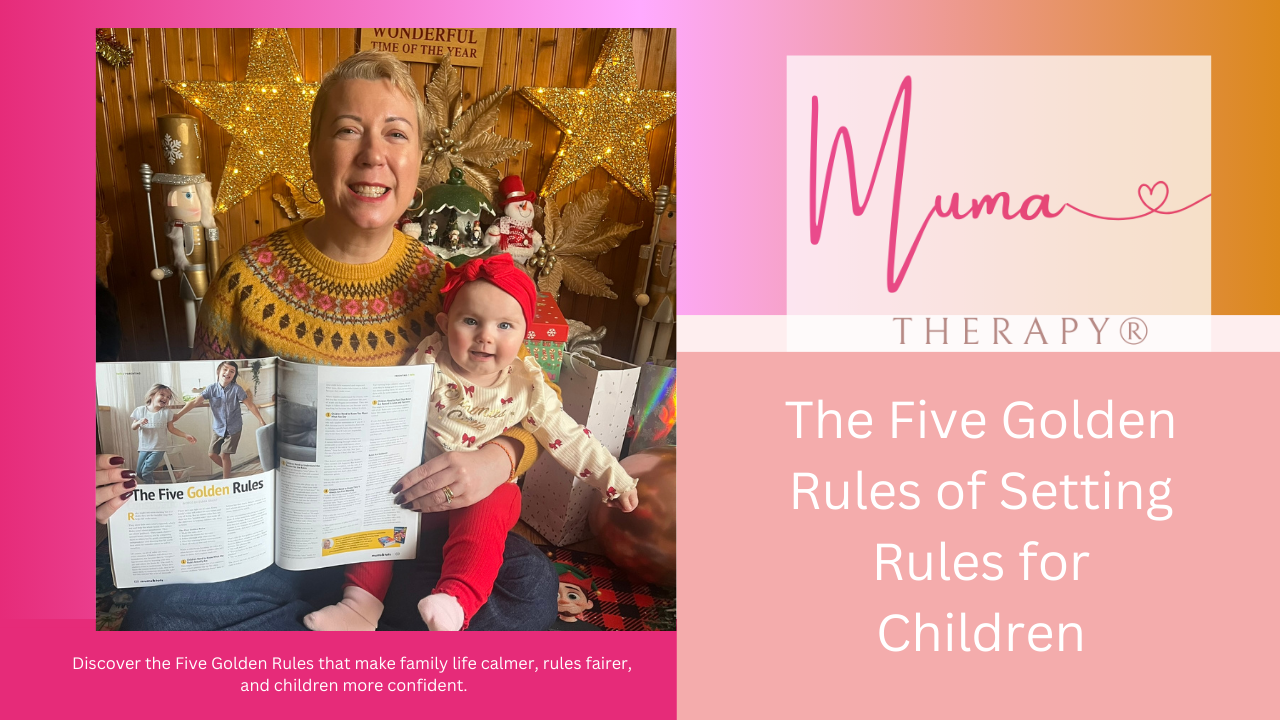
In the Winter issue of Mums & Tots Magazine, I share The Five Golden Rules for setting rules that actually work for children and parents. They are simple, practical and designed to support calm homes and confident children, especially after busy seasons like Christmas. Parenting doesn’t need to be perfect it needs to be consistent, compassionate, and grounded in love. That’s how rules become golden. You can find the complete article in the Winter issue of Mums & Tots Magazine, out now.
A gentle reset, not a hard restart, is often all children need.
Happy New Year, Em x
By Emma Grant – Author, Hypnotherapist, Nutritional Therapist, Parenting Coach & Founder of Mumatherapy® and Happy Childcare
Stay connected & join our Newsletter Mumatherapy Motivations with tips & Support to help you to
RELAX, RESTORE & RESET!
Plus download your Free Calm and Confident Potty Training Starter Pack
A simple, gentle toolkit to help your child say goodbye to nappies with confidence.
Inside your free starter pack:
✔ Potty Training At A Glance (your simple step-by-step guide)
✔ Potty Heart Heroes™ (emotional support tool)
✔ Wee and Poo Chart (daily routine tracker)
Don't worry, your information will not be shared.
We hate SPAM. We will never sell your information, for any reason.
